Aural Focus Training in Ensemble Classes

Jul 25, 2025 By

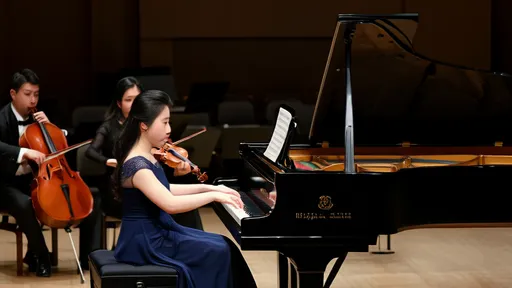
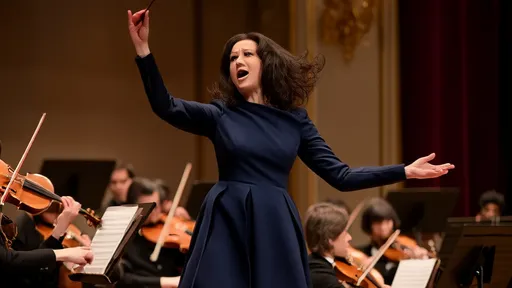
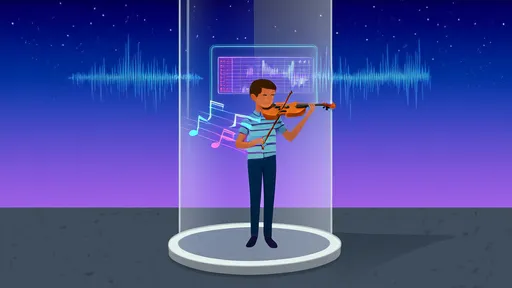
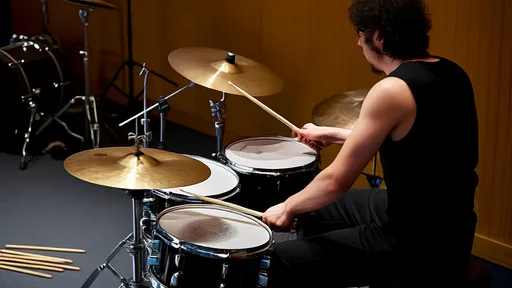
In the realm of ensemble performance, the cultivation of acute auditory focus stands as a cornerstone of musical cohesion. Unlike solo practice, where the musician's attention remains self-contained, ensemble playing demands a dynamic auditory awareness that stretches beyond one's own instrument. This perceptual expansion—what we might call "hearing horizontally and vertically"—forms the bedrock of true musical dialogue. The most compelling ensemble performances emerge not from mere synchronization of notes, but from this deep, responsive listening that breathes life into the spaces between sounds.

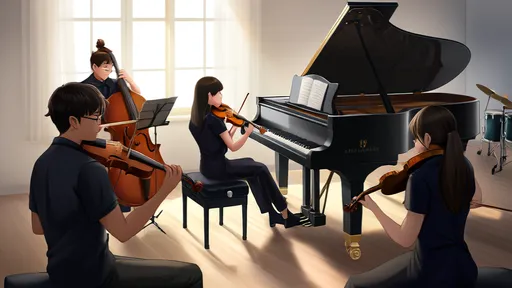
The training of auditory focus in ensemble settings begins with dismantling the habitual self-focus ingrained through years of individual practice. Young musicians often enter their first ensemble rehearsals with what pedagogues describe as "sonic myopia"—an aural equivalent of tunnel vision fixated on their own playing. The breakthrough occurs when they discover how their instrumental line weaves into the larger tapestry. This awakening resembles the moment when one stops seeing individual brushstrokes in a painting and begins perceiving the complete image. The violinist learns to hear the cello's countermelody as an extension of their own phrase; the clarinetist discovers how their staccato articulations converse with the flute's legato line.

Advanced ensemble programs employ specialized exercises to develop this multidimensional hearing. One particularly effective method involves "selective mute" rehearsals, where players alternate between playing and listening—not as passive observers but as active auditors mapping the musical architecture. Another technique requires musicians to notate harmonic progressions or rhythmic patterns they detect while playing, training the ear to maintain analytical awareness amidst performance. These practices cultivate what jazz musicians call "big ears"—the ability to simultaneously process multiple musical elements while executing one's own part.

The psychological dimension of auditory focus training proves equally crucial. Ensemble musicians must develop what cognitive scientists term "attention switching"—the fluid movement between focal and peripheral listening. In a string quartet, for instance, the first violinist might focus intently on the second violin's articulation during a thematic exchange, then broaden awareness to sense the cello's harmonic underpinning, all while monitoring their own tone production. This mental agility mirrors the cognitive demands of simultaneous interpretation, where the brain processes multiple streams of information in real time.

Technological tools have opened new frontiers in auditory focus development. Binaural recording setups allow players to rehearse with customizable audio mixes, emphasizing different instrumental groupings. Advanced software provides visual feedback on ensemble timing and intonation, making subtle auditory relationships perceptible to developing ears. However, seasoned educators caution against overreliance on technology; the goal remains cultivating innate listening skills that function in the unpredictable environment of live performance.

The social-emotional aspects of auditory focus training reveal profound truths about musical collaboration. When ensemble members truly hear one another, their playing begins to exhibit what researchers call "nonverbal entrainment"—the spontaneous synchronization of phrasing and dynamics that distinguishes mechanical precision from organic musicality. This phenomenon explains why some ensembles with technically flawless individual players lack chemistry, while others with less polished technique create magical performances. The difference lies in the quality of listening, the willingness to let others' sounds reshape one's own musical intentions.

Historical accounts of legendary ensembles consistently highlight this auditory symbiosis. The Budapest String Quartet described their rehearsals as "four people learning to breathe through one set of lungs." Jazz great Charles Mingus demanded his band members "hear through each other's ears." These metaphors point toward the transcendent potential of cultivated auditory focus—the moment when individual listeners merge into a collective ear, giving rise to performances where the whole becomes exponentially greater than the sum of parts. This alchemy remains the holy grail of ensemble playing, achievable only through relentless ear training.

Contemporary music education increasingly recognizes auditory focus as a teachable skill rather than an innate gift. Cutting-edge curricula now incorporate neuroscientific findings about auditory processing, designing exercises that strengthen specific listening pathways. Some programs have students learn multiple parts within an ensemble piece, building cognitive flexibility. Others employ "blind ensemble" drills where players perform without sheet music, heightening reliance on aural cues. These methods acknowledge that great ensemble playing stems not just from technical mastery, but from a refined auditory intelligence.

The implications extend beyond classical contexts. Rock bands that last decades, like U2 or Radiohead, demonstrate similar principles—their longevity stems from evolving a shared sonic language through deep listening. Studio producers speak of "ear mixing," the ability to anticipate how individual tracks will blend before hearing the combination. These diverse musical worlds converge on the same truth: advanced auditory focus forms the invisible framework supporting all meaningful musical interaction.

As music pedagogy continues evolving, the primacy of ear training in ensemble education becomes ever clearer. The musicians who shape tomorrow's musical landscape won't merely be those with flawless technique or dazzling stage presence, but those who have mastered the art of listening—who understand that great music emerges not from instruments, but from the spaces between them, bridged by attentive ears. In an age of digital distraction, the ability to sustain deep auditory focus may become one of the most valuable skills a musician can cultivate, both artistically and humanly.
Recommend Posts
Music

Spectral Analysis of Guqin's Yin" and "Nao" Techniques

By /Jul 25, 2025

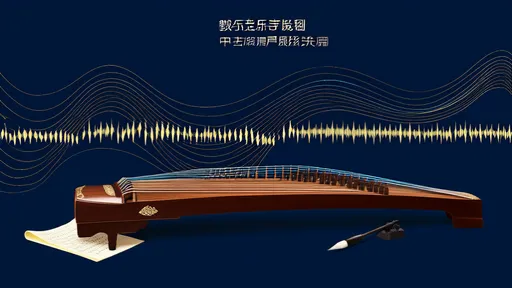
The ancient Chinese guqin, a seven-stringed zither with a history spanning over three millennia, is revered not only for its melodic potential but also for the subtle nuances of its playing techniques. Among these, the yin and nao—vibrato and oscillatory embellishments—stand as pillars of the instrument’s expressive depth. Recent advancements in audio spectral analysis have allowed researchers to deconstruct these techniques with unprecedented precision, revealing a complex interplay of harmonics, temporal modulation, and cultural intent embedded in every note.
Music

Marimba Four-Mallet Roll Technique

By /Jul 25, 2025

The art of four-mallet marimba playing has evolved into a sophisticated and highly expressive technique within the percussion world. Unlike traditional two-mallet approaches, the four-mallet method allows performers to create rich harmonies, intricate counterpoint, and fluid melodic lines simultaneously. This advancement has transformed the marimba from a primarily rhythmic instrument into a fully polyphonic solo voice capable of standing alongside pianos and string instruments in complexity and emotional depth.
Music

Polyphonic Training on the Organ Pedal Keyboard

By /Jul 25, 2025

The art of playing the organ pedalboard represents one of the most challenging aspects of mastering this majestic instrument. Unlike piano pedals which serve merely as modifiers of tone, the organ's pedalboard functions as a complete keyboard in its own right - a keyboard played with the feet that demands equal technical precision and musical understanding as manual playing.
Music

Harmonic Pedal Rapid Mental Calculation Method

By /Jul 25, 2025

The world of harp playing is filled with intricate techniques and subtle nuances that separate the proficient from the masterful. Among these, the art of pedal changes stands as one of the most demanding skills, requiring both physical dexterity and mental agility. While traditional methods emphasize rote memorization and slow repetition, a revolutionary approach has emerged in recent years: the pedal quick-calculation method. This innovative technique transforms how harpists approach pedal transitions, turning what was once a stumbling block into a seamless element of performance.
Music

Psychological Reconstruction after Performance Mistakes

By /Jul 25, 2025

Every musician, from the conservatory student to the concert hall veteran, knows the stomach-dropping moment when a wrong note escapes their instrument. That microsecond of dissonance often triggers a cascade of physiological responses – sweaty palms, racing heartbeat, tunnel vision – that can derail an entire performance. Yet what separates exceptional performers isn’t their ability to avoid mistakes, but rather their capacity to transform those moments into opportunities for artistic recovery.
Music

Optimal Time Allocation for Practice Efficiency

By /Jul 25, 2025

The concept of practice makes perfect has been ingrained in our collective consciousness for generations. Yet what separates truly exceptional performers from the merely competent isn't just the amount of practice, but rather when and how that practice is distributed across time. The science of skill acquisition reveals surprising truths about how our brains best absorb and retain new abilities.
Music

Cultivating Auditory Anticipation Skills

By /Jul 25, 2025

In the symphony of human perception, auditory prediction stands as one of our brain's most sophisticated yet underappreciated capabilities. This neural orchestra allows us to anticipate sounds before they occur—whether predicting the next note in a melody or preparing for the screech of brakes in traffic. Recent neuroscience research reveals this isn't passive hearing but an active cognitive performance where our brains constantly generate and update probabilistic models of sonic futures.
Music

Neuronal Encoding Mechanisms of Musical Memory

By /Jul 25, 2025

The human brain's ability to recognize and recall music remains one of neuroscience's most fascinating mysteries. Recent breakthroughs in neural decoding technologies have begun unraveling how our brains encode, store, and retrieve musical memories – processes that involve sophisticated coordination across auditory, emotional, and memory networks.
Music

Intensive Energy Transformation Training on Stage

By /Jul 25, 2025

The stage lights blaze to life, and suddenly every molecule in your body feels electrified. That moment when adrenaline floods your system isn’t just nerves—it’s raw energy waiting to be harnessed. Performers across disciplines, from actors to musicians, have long grappled with stage fright, but what if we reframed that tension as potential? The concept of energy conversion training for stage performance isn’t about eliminating nerves; it’s about alchemizing them into presence.
Music

The Unity of Structure in Modern Suites

By /Jul 25, 2025

The concept of structural unity in modern suites represents a fascinating evolution in musical composition, bridging the gap between traditional forms and contemporary experimentation. Unlike their Baroque or Classical predecessors, which often adhered to strict dance movements or thematic development, modern suites embrace a more fluid approach while maintaining an underlying coherence. Composers today weave together disparate elements—tonal and atonal, electronic and acoustic, minimalistic and complex—into a cohesive whole that challenges listeners while rewarding careful attention.
Music

Thematic Development Techniques in Symphonic Poems

By /Jul 25, 2025

The symphonic poem, a form of orchestral music that emerged in the 19th century, represents one of the most innovative developments in classical composition. Unlike traditional symphonies, which adhere to strict structural forms, the symphonic poem is free-flowing, often inspired by extra-musical ideas such as literature, nature, or historical events. At the heart of this genre lies the technique of thematic transformation—a method through which a single musical idea evolves throughout the piece, binding the work together while allowing for dramatic shifts in mood and narrative. This approach, pioneered by composers like Franz Liszt and later refined by Richard Strauss and others, revolutionized how orchestral music could tell stories and evoke imagery.
Music

Thematic Transformation Techniques in Variations

By /Jul 25, 2025

The art of thematic transformation in variation form represents one of the most sophisticated techniques in Western classical music. From Baroque ground basses to Romantic character variations, composers have employed this principle to explore the hidden potentials of a simple musical idea. The process goes far beyond mere ornamentation – it involves profound recomposition that reveals new emotional landscapes while maintaining recognizable connections to the original material.
Music

The Art of Contrast in Rondo Form Inserts

By /Jul 25, 2025

The rondo form, with its recurring themes and contrasting episodes, stands as one of the most engaging structures in classical music. Its charm lies not just in the repetition of the main theme but in the artful interplay between familiarity and surprise. The contrasting episodes, or "digressions," serve as the lifeblood of the rondo, offering listeners moments of departure before returning them to the comfort of the refrain. This dynamic creates a musical journey that balances expectation and innovation.
Music

Contradiction Construction in the Development Section of Sonata Form

By /Jul 25, 2025

The sonata form's development section stands as one of the most dynamic and intellectually charged territories in Western classical music. Unlike the exposition's orderly presentation of themes or the recapitulation's resolution, the development thrives on instability, tension, and the deliberate fracturing of musical ideas. Here, composers engage in a high-stakes game of thematic manipulation, harmonic exploration, and emotional volatility. The very essence of the development lies in its ability to transform familiar material into something unsettled, even dangerous—a musical crucible where themes collide, mutate, and vie for dominance.
Music

Emotional Guidance in Musical Expressiveness

By /Jul 25, 2025

The power of music to evoke and guide emotions is nothing short of miraculous. From the haunting melodies of a solo violin to the thunderous crescendo of a full orchestra, music has an unparalleled ability to shape our emotional landscape. It can lift us from despair, calm our anxieties, or ignite our passions—all without uttering a single word. This unique quality makes music not just an art form but a universal language of the soul.
Music

Dual-Channel Reinforcement for Memorizing Scores

By /Jul 25, 2025

The art of memorizing music scores has long been a subject of fascination for musicians, educators, and cognitive scientists alike. While some performers rely on muscle memory or visual cues, others swear by the power of mental imagery and auditory reinforcement. What if there were a way to combine these approaches into a unified system? Recent research suggests that dual-channel reinforcement—a method that engages both visual and auditory memory pathways simultaneously—may hold the key to more efficient and lasting score retention.
Music

Aural Focus Training in Ensemble Classes

By /Jul 25, 2025

In the realm of ensemble performance, the cultivation of acute auditory focus stands as a cornerstone of musical cohesion. Unlike solo practice, where the musician's attention remains self-contained, ensemble playing demands a dynamic auditory awareness that stretches beyond one's own instrument. This perceptual expansion—what we might call "hearing horizontally and vertically"—forms the bedrock of true musical dialogue. The most compelling ensemble performances emerge not from mere synchronization of notes, but from this deep, responsive listening that breathes life into the spaces between sounds.
Music

Enhancing Efficiency in Adult Piano Learning

By /Jul 25, 2025

Learning to play the piano as an adult can be both a rewarding and challenging experience. Unlike children, adults bring a wealth of life experience, discipline, and motivation to the table, but they also face unique obstacles such as limited practice time and ingrained habits. The key to improving efficiency in adult piano learning lies in understanding these challenges and adopting strategies tailored to mature learners.
Music

The Scientific Cultivation Window for Absolute Pitch

By /Jul 25, 2025

The phenomenon of absolute pitch, often referred to as "perfect pitch," has long fascinated scientists, musicians, and educators alike. This rare ability allows individuals to identify or reproduce a musical note without any reference tone, a skill that seems almost magical to those who don’t possess it. What makes absolute pitch even more intriguing is the growing body of research suggesting that there’s a critical window during childhood when this ability can be nurtured and developed. Understanding this scientific window isn’t just an academic exercise—it has profound implications for music education and cognitive development.
Music

Tuning Techniques for Timpani in Live Performances

By /Jul 25, 2025

In the grand orchestral landscape, few instruments command as much primal power as the timpani. These massive kettledrums don't merely provide rhythmic foundation—they shape dramatic tension, underscore emotional climaxes, and occasionally shake concert hall foundations. Yet what audiences seldom realize is that nearly half the instrument's magic happens silently between notes, through the refined craft of live tuning.