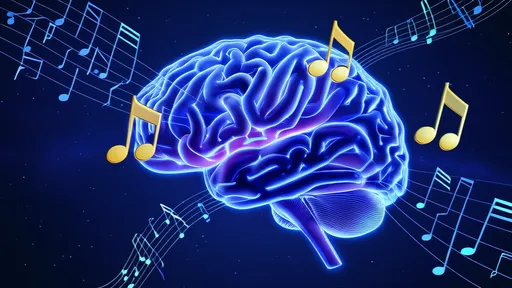
The human brain's ability to recognize and recall music remains one of neuroscience's most fascinating mysteries. Recent breakthroughs in neural decoding technologies have begun unraveling how our brains encode, store, and retrieve musical memories – processes that involve sophisticated coordination across auditory, emotional, and memory networks.
At the heart of this phenomenon lies the auditory cortex, where specialized neurons exhibit remarkable sensitivity to musical patterns. Studies using high-resolution fMRI reveal that these neurons don't merely process sound waves but create abstract representations of musical phrases. What's particularly astonishing is how these neural patterns remain stable over time, allowing us to recognize songs we haven't heard in decades within milliseconds.
The hippocampus plays a surprising role in musical memory, traditionally associated with episodic memories rather than perceptual recognition. Cutting-edge research demonstrates that this seahorse-shaped structure acts as a neural conductor, coordinating between cortical areas that store the melodic information and emotional centers that attach significance to musical experiences. This explains why hearing a childhood song can trigger vivid autobiographical memories.
Neuroplasticity research shows that musicians' brains develop enhanced memory encoding capacities. The corpus callosum in trained musicians shows greater connectivity between hemispheres, while their auditory cortices exhibit expanded representation for instrument-specific tones. This specialization comes at a cost – the famous "musician's dystonia" reveals how intensely the brain rewires itself for musical expertise.
Emotional processing regions like the amygdala create powerful memory anchors for music. When we experience chills during particular musical passages, it signifies the activation of the brain's reward system through dopamine release. These neurochemical markers dramatically enhance memory consolidation, explaining why emotionally charged music becomes so deeply ingrained in our neural architecture.
Neuroscientists have recently identified "concept cells" in the medial temporal lobe that fire selectively in response to specific musical genres or artists. These neurons operate similarly to the famous "Jennifer Aniston neurons" that respond to specific concepts. Their discovery suggests the brain organizes musical knowledge through specialized neural assemblies rather than distributed patterns.
The temporal dynamics of musical memory reveal another layer of complexity. EEG studies show that rhythm processing occurs in distinct brain waves – theta waves track beat perception while gamma oscillations encode timbral qualities. This parallel processing allows for the instantaneous recognition of music even when heard through poor quality speakers or masked by background noise.
Memory reconsolidation research demonstrates that each time we recall a song, the memory becomes momentarily labile before being restabilized. This process explains why musical memories gradually transform over time and how false musical memories can be implanted – a phenomenon with intriguing implications for both music therapy and legal applications of memory research.
Cross-cultural studies reveal universal neural signatures in music processing alongside culturally specific adaptations. While all human brains show similar activation patterns when processing consonant versus dissonant intervals, the specific emotional responses to these intervals vary significantly based on musical enculturation. This nature-versus-nurture interplay continues to challenge researchers.
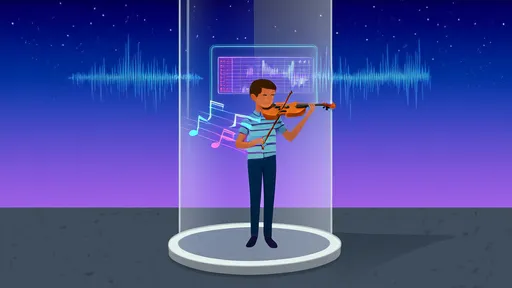
Cutting-edge brain decoding technology can now reconstruct recognizable musical passages from neural activity alone. By combining machine learning with intracranial recordings, scientists have achieved rudimentary "mind reading" of musical perception. These advances promise revolutionary applications for musical brain-computer interfaces while raising important ethical questions about neural privacy.
The study of musical memory encoding also provides crucial insights into neurodegenerative diseases. Alzheimer's patients often retain musical memories long after losing other cognitive faculties, suggesting music engages alternative neural pathways that resist typical degenerative processes. Music therapy interventions based on these findings show remarkable efficacy in memory care.
Future research directions aim to map the complete neural score of musical memory – from sensory encoding to emotional association and autobiographical integration. As non-invasive imaging techniques reach unprecedented resolution, we stand on the verge of decoding how three pounds of neural tissue can store a lifetime of musical experiences and why these memories outlast nearly all other cognitive functions.

By /Jul 25, 2025
By /Jul 25, 2025

By /Jul 25, 2025

By /Jul 25, 2025
By /Jul 25, 2025

By /Jul 25, 2025

By /Jul 25, 2025
By /Jul 25, 2025

By /Jul 25, 2025

By /Jul 25, 2025
By /Jul 25, 2025

By /Jul 25, 2025
By /Jul 25, 2025
By /Jul 25, 2025
By /Jul 25, 2025
By /Jul 25, 2025

By /Jul 25, 2025

By /Jul 25, 2025
By /Jul 25, 2025
By /Jul 25, 2025
