Optimal Time Allocation for Practice Efficiency

Jul 25, 2025 By

The concept of practice makes perfect has been ingrained in our collective consciousness for generations. Yet what separates truly exceptional performers from the merely competent isn't just the amount of practice, but rather when and how that practice is distributed across time. The science of skill acquisition reveals surprising truths about how our brains best absorb and retain new abilities.

Morning hours hold particular significance for deliberate practice. Numerous studies across various disciplines - from music to mathematics - demonstrate that the first two hours after waking represent a cognitive sweet spot for most individuals. During this window, the prefrontal cortex operates at peak capacity, allowing for heightened focus and analytical thinking. This makes mornings ideal for tackling the most challenging aspects of whatever skill you're trying to master.

Interestingly, the benefits of morning practice extend beyond the immediate session. Neuroscience research shows that skills practiced during these golden morning hours tend to consolidate more effectively during subsequent sleep cycles. The brain appears to prioritize these early inputs, creating stronger neural pathways that form the foundation of true expertise.

Post-lunch hours present a different kind of opportunity. While cognitive sharpness typically dips during this period (the well-known afternoon slump), this time can be remarkably productive for review and refinement rather than new learning. The slightly subdued mental state actually helps practitioners notice subtle imperfections they might overlook during more alert periods. Many professional musicians report catching minute technical flaws during these sessions that escaped their attention in morning practice.

The late afternoon brings another surge in practice potential. Between 3:00 PM and 6:00 PM, most people experience a secondary peak in cognitive function. This window proves particularly valuable for integrating different components of complex skills. Where morning sessions excel at breaking down difficult elements, late afternoon proves ideal for putting the pieces back together in fluid performance.

Evening practice sessions occupy a special place in skill development. Contrary to popular belief, the hours before bedtime aren't just for winding down. When structured properly, they serve as powerful consolidation periods. The key lies in focusing on slow, mindful repetitions rather than pushing for breakthroughs. This gentle reinforcement helps cement the day's learning while preparing neural pathways for overnight processing.

The relationship between practice timing and sleep forms one of the most fascinating aspects of skill acquisition. Sleep doesn't merely restore energy - it actively reorganizes and strengthens what we've practiced. This explains why consistent daily practice outperforms marathon weekend sessions. The regular sleep cycles between practice bouts create countless opportunities for neural optimization that simply can't be replicated through cramming.

Seasonal variations in practice efficiency deserve attention as well. Many athletes and performers report noticeable differences in their learning curves at different times of year. Spring and autumn tend to yield the most consistent progress, possibly tied to biological rhythms and daylight exposure. Summer's longer days can facilitate extended practice sessions, while winter's introspective quality often benefits technical refinement over expansive learning.

Age significantly influences optimal practice timing as well. Children and teenagers typically show greater afternoon receptivity to new skills, while adults tend to benefit more from morning concentration. Older practitioners often find their peak windows shifting earlier in the day. These patterns underscore the importance of personalized scheduling rather than rigid adherence to general guidelines.

The interplay between practice timing and nutrition creates another layer of complexity. Cognitive scientists have identified specific dietary patterns that can extend or intensify productive practice windows. For instance, protein-rich breakfasts appear to prolong morning focus, while carefully timed carbohydrate intake can mitigate afternoon energy crashes. Hydration levels similarly impact practice quality more than most practitioners realize.

Modern technology offers unprecedented opportunities to track and optimize practice timing. Wearable devices can now identify individual circadian rhythms with remarkable precision, allowing practitioners to align sessions with their unique biological peaks. However, this technological advantage comes with a caveat - over-reliance on metrics can sometimes obscure the intuitive sense of timing that seasoned performers develop through experience.

Cultural factors inevitably shape our practice rhythms as well. Societies with strong siesta traditions developed different learning patterns than those favoring continuous daily schedules. These cultural imprints suggest that optimal practice timing may be as much about adaptation as it is about universal biological truths. The most effective practitioners often blend scientific principles with cultural wisdom to create hybrid approaches.

Perhaps the most overlooked aspect of timing involves the spaces between practice sessions. Micro-breaks of 5-10 minutes every hour prove far more effective than longer breaks spaced further apart. These brief pauses allow for subconscious processing while maintaining cognitive momentum. Similarly, alternating between different skills during a practice day can prevent mental fatigue while promoting deeper overall learning.

The role of ultradian rhythms - our body's 90-120 minute cycles of peak focus - provides another crucial timing consideration. Aligning practice sessions to begin with these natural cycles can dramatically improve retention and performance. Many elite practitioners structure their sessions in 90-minute blocks with 20-30 minute breaks between, mirroring this fundamental biological pattern.

Environmental timing factors often go unnoticed but significantly impact practice quality. Light exposure, room temperature, and even background noise levels fluctuate predictably throughout the day. Savvy practitioners learn to match practice types to these environmental conditions - using bright, cool mornings for technical work and warmer, dimmer evenings for expressive refinement.

Long-term skill development requires understanding macro-timing as well. The famous "10,000 hour rule" obscures the crucial reality that these hours must be strategically distributed over years, not compressed into short periods. Research on expertise consistently shows that consistent moderate practice over extended durations outperforms intense bursts followed by long gaps.

Psychological timing represents perhaps the most personal dimension of practice efficiency. Each individual experiences unique fluctuations in motivation, confidence, and mental resilience throughout the day. Learning to recognize and work with these emotional rhythms - rather than against them - separates truly effective practitioners from those who merely put in time.

The most successful performers across all fields share one timing-related trait: they practice with their natural rhythms rather than against them. While discipline remains essential, the highest levels of achievement come from aligning rigorous effort with biological and psychological realities. This harmonious approach transforms practice from a chore into a sustainable, rewarding process.

Ultimately, the golden rules of practice timing remind us that human excellence isn't just about effort, but about effort applied with intelligent timing. By understanding and respecting our innate rhythms, we unlock levels of achievement that sheer willpower alone can never reach. The science is clear - when we practice matters just as much as how we practice.
Recommend Posts
Music

Spectral Analysis of Guqin's Yin" and "Nao" Techniques

By /Jul 25, 2025

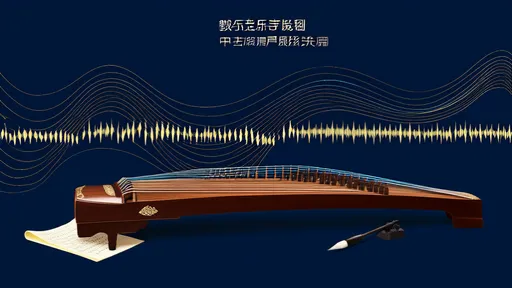
The ancient Chinese guqin, a seven-stringed zither with a history spanning over three millennia, is revered not only for its melodic potential but also for the subtle nuances of its playing techniques. Among these, the yin and nao—vibrato and oscillatory embellishments—stand as pillars of the instrument’s expressive depth. Recent advancements in audio spectral analysis have allowed researchers to deconstruct these techniques with unprecedented precision, revealing a complex interplay of harmonics, temporal modulation, and cultural intent embedded in every note.
Music

Marimba Four-Mallet Roll Technique

By /Jul 25, 2025

The art of four-mallet marimba playing has evolved into a sophisticated and highly expressive technique within the percussion world. Unlike traditional two-mallet approaches, the four-mallet method allows performers to create rich harmonies, intricate counterpoint, and fluid melodic lines simultaneously. This advancement has transformed the marimba from a primarily rhythmic instrument into a fully polyphonic solo voice capable of standing alongside pianos and string instruments in complexity and emotional depth.
Music

Polyphonic Training on the Organ Pedal Keyboard

By /Jul 25, 2025

The art of playing the organ pedalboard represents one of the most challenging aspects of mastering this majestic instrument. Unlike piano pedals which serve merely as modifiers of tone, the organ's pedalboard functions as a complete keyboard in its own right - a keyboard played with the feet that demands equal technical precision and musical understanding as manual playing.
Music

Harmonic Pedal Rapid Mental Calculation Method

By /Jul 25, 2025

The world of harp playing is filled with intricate techniques and subtle nuances that separate the proficient from the masterful. Among these, the art of pedal changes stands as one of the most demanding skills, requiring both physical dexterity and mental agility. While traditional methods emphasize rote memorization and slow repetition, a revolutionary approach has emerged in recent years: the pedal quick-calculation method. This innovative technique transforms how harpists approach pedal transitions, turning what was once a stumbling block into a seamless element of performance.
Music

Psychological Reconstruction after Performance Mistakes

By /Jul 25, 2025

Every musician, from the conservatory student to the concert hall veteran, knows the stomach-dropping moment when a wrong note escapes their instrument. That microsecond of dissonance often triggers a cascade of physiological responses – sweaty palms, racing heartbeat, tunnel vision – that can derail an entire performance. Yet what separates exceptional performers isn’t their ability to avoid mistakes, but rather their capacity to transform those moments into opportunities for artistic recovery.
Music

Optimal Time Allocation for Practice Efficiency

By /Jul 25, 2025

The concept of practice makes perfect has been ingrained in our collective consciousness for generations. Yet what separates truly exceptional performers from the merely competent isn't just the amount of practice, but rather when and how that practice is distributed across time. The science of skill acquisition reveals surprising truths about how our brains best absorb and retain new abilities.
Music

Cultivating Auditory Anticipation Skills

By /Jul 25, 2025

In the symphony of human perception, auditory prediction stands as one of our brain's most sophisticated yet underappreciated capabilities. This neural orchestra allows us to anticipate sounds before they occur—whether predicting the next note in a melody or preparing for the screech of brakes in traffic. Recent neuroscience research reveals this isn't passive hearing but an active cognitive performance where our brains constantly generate and update probabilistic models of sonic futures.
Music

Neuronal Encoding Mechanisms of Musical Memory

By /Jul 25, 2025

The human brain's ability to recognize and recall music remains one of neuroscience's most fascinating mysteries. Recent breakthroughs in neural decoding technologies have begun unraveling how our brains encode, store, and retrieve musical memories – processes that involve sophisticated coordination across auditory, emotional, and memory networks.
Music

Intensive Energy Transformation Training on Stage

By /Jul 25, 2025

The stage lights blaze to life, and suddenly every molecule in your body feels electrified. That moment when adrenaline floods your system isn’t just nerves—it’s raw energy waiting to be harnessed. Performers across disciplines, from actors to musicians, have long grappled with stage fright, but what if we reframed that tension as potential? The concept of energy conversion training for stage performance isn’t about eliminating nerves; it’s about alchemizing them into presence.
Music

The Unity of Structure in Modern Suites

By /Jul 25, 2025

The concept of structural unity in modern suites represents a fascinating evolution in musical composition, bridging the gap between traditional forms and contemporary experimentation. Unlike their Baroque or Classical predecessors, which often adhered to strict dance movements or thematic development, modern suites embrace a more fluid approach while maintaining an underlying coherence. Composers today weave together disparate elements—tonal and atonal, electronic and acoustic, minimalistic and complex—into a cohesive whole that challenges listeners while rewarding careful attention.
Music

Thematic Development Techniques in Symphonic Poems

By /Jul 25, 2025

The symphonic poem, a form of orchestral music that emerged in the 19th century, represents one of the most innovative developments in classical composition. Unlike traditional symphonies, which adhere to strict structural forms, the symphonic poem is free-flowing, often inspired by extra-musical ideas such as literature, nature, or historical events. At the heart of this genre lies the technique of thematic transformation—a method through which a single musical idea evolves throughout the piece, binding the work together while allowing for dramatic shifts in mood and narrative. This approach, pioneered by composers like Franz Liszt and later refined by Richard Strauss and others, revolutionized how orchestral music could tell stories and evoke imagery.
Music

Thematic Transformation Techniques in Variations

By /Jul 25, 2025

The art of thematic transformation in variation form represents one of the most sophisticated techniques in Western classical music. From Baroque ground basses to Romantic character variations, composers have employed this principle to explore the hidden potentials of a simple musical idea. The process goes far beyond mere ornamentation – it involves profound recomposition that reveals new emotional landscapes while maintaining recognizable connections to the original material.
Music

The Art of Contrast in Rondo Form Inserts

By /Jul 25, 2025

The rondo form, with its recurring themes and contrasting episodes, stands as one of the most engaging structures in classical music. Its charm lies not just in the repetition of the main theme but in the artful interplay between familiarity and surprise. The contrasting episodes, or "digressions," serve as the lifeblood of the rondo, offering listeners moments of departure before returning them to the comfort of the refrain. This dynamic creates a musical journey that balances expectation and innovation.
Music

Contradiction Construction in the Development Section of Sonata Form

By /Jul 25, 2025

The sonata form's development section stands as one of the most dynamic and intellectually charged territories in Western classical music. Unlike the exposition's orderly presentation of themes or the recapitulation's resolution, the development thrives on instability, tension, and the deliberate fracturing of musical ideas. Here, composers engage in a high-stakes game of thematic manipulation, harmonic exploration, and emotional volatility. The very essence of the development lies in its ability to transform familiar material into something unsettled, even dangerous—a musical crucible where themes collide, mutate, and vie for dominance.
Music

Emotional Guidance in Musical Expressiveness

By /Jul 25, 2025

The power of music to evoke and guide emotions is nothing short of miraculous. From the haunting melodies of a solo violin to the thunderous crescendo of a full orchestra, music has an unparalleled ability to shape our emotional landscape. It can lift us from despair, calm our anxieties, or ignite our passions—all without uttering a single word. This unique quality makes music not just an art form but a universal language of the soul.
Music

Dual-Channel Reinforcement for Memorizing Scores

By /Jul 25, 2025

The art of memorizing music scores has long been a subject of fascination for musicians, educators, and cognitive scientists alike. While some performers rely on muscle memory or visual cues, others swear by the power of mental imagery and auditory reinforcement. What if there were a way to combine these approaches into a unified system? Recent research suggests that dual-channel reinforcement—a method that engages both visual and auditory memory pathways simultaneously—may hold the key to more efficient and lasting score retention.
Music

Aural Focus Training in Ensemble Classes

By /Jul 25, 2025

In the realm of ensemble performance, the cultivation of acute auditory focus stands as a cornerstone of musical cohesion. Unlike solo practice, where the musician's attention remains self-contained, ensemble playing demands a dynamic auditory awareness that stretches beyond one's own instrument. This perceptual expansion—what we might call "hearing horizontally and vertically"—forms the bedrock of true musical dialogue. The most compelling ensemble performances emerge not from mere synchronization of notes, but from this deep, responsive listening that breathes life into the spaces between sounds.
Music

Enhancing Efficiency in Adult Piano Learning

By /Jul 25, 2025

Learning to play the piano as an adult can be both a rewarding and challenging experience. Unlike children, adults bring a wealth of life experience, discipline, and motivation to the table, but they also face unique obstacles such as limited practice time and ingrained habits. The key to improving efficiency in adult piano learning lies in understanding these challenges and adopting strategies tailored to mature learners.
Music

The Scientific Cultivation Window for Absolute Pitch

By /Jul 25, 2025

The phenomenon of absolute pitch, often referred to as "perfect pitch," has long fascinated scientists, musicians, and educators alike. This rare ability allows individuals to identify or reproduce a musical note without any reference tone, a skill that seems almost magical to those who don’t possess it. What makes absolute pitch even more intriguing is the growing body of research suggesting that there’s a critical window during childhood when this ability can be nurtured and developed. Understanding this scientific window isn’t just an academic exercise—it has profound implications for music education and cognitive development.
Music

Tuning Techniques for Timpani in Live Performances

By /Jul 25, 2025

In the grand orchestral landscape, few instruments command as much primal power as the timpani. These massive kettledrums don't merely provide rhythmic foundation—they shape dramatic tension, underscore emotional climaxes, and occasionally shake concert hall foundations. Yet what audiences seldom realize is that nearly half the instrument's magic happens silently between notes, through the refined craft of live tuning.