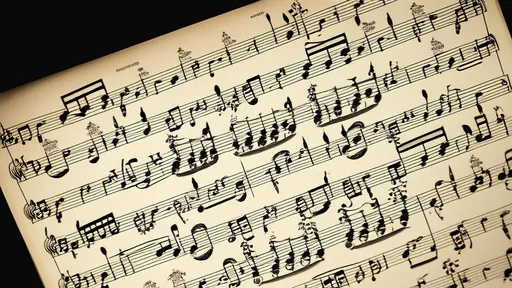
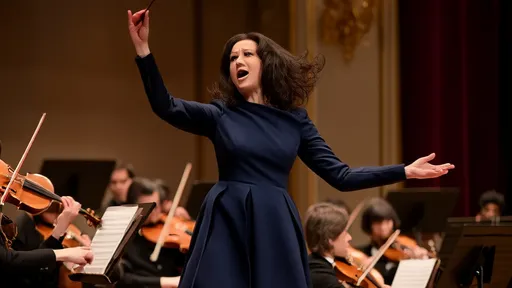
The symphonic poem, a form of orchestral music that emerged in the 19th century, represents one of the most innovative developments in classical composition. Unlike traditional symphonies, which adhere to strict structural forms, the symphonic poem is free-flowing, often inspired by extra-musical ideas such as literature, nature, or historical events. At the heart of this genre lies the technique of thematic transformation—a method through which a single musical idea evolves throughout the piece, binding the work together while allowing for dramatic shifts in mood and narrative. This approach, pioneered by composers like Franz Liszt and later refined by Richard Strauss and others, revolutionized how orchestral music could tell stories and evoke imagery.
Thematic transformation is not merely a compositional device but a narrative tool. A melody introduced at the beginning of a symphonic poem might reappear later in a altered guise—perhaps faster, slower, in a different key, or with entirely new orchestration. This technique allows the music to reflect the progression of a story or the changing emotions of a character. For instance, in Liszt's Les Préludes, the initial theme undergoes multiple transformations, each representing a different stage of life—love, war, destiny—while remaining recognizably linked to its original form. The listener is guided through an emotional journey, with the recurring theme acting as a thread that ties the entire work together.
What makes thematic transformation particularly compelling is its flexibility. Unlike the rigid sonata form, where themes must follow predetermined developmental paths, the symphonic poem grants composers the freedom to manipulate motifs in ways that serve the extra-musical narrative. A heroic theme might be fragmented into dissonant shards to depict a battle, or a serene melody could be slowed to a funeral march to signify tragedy. This adaptability allows for a level of expressive depth that purely abstract music often struggles to achieve. In Strauss's Don Quixote, for example, the solo cello represents the titular character, and its thematic material shifts to mirror Quixote's delusions, triumphs, and eventual decline.
The symphonic poem's reliance on thematic unity also creates a sense of cohesion despite its episodic nature. Since the form lacks the predictable sections of a symphony, the recurring motifs prevent the music from feeling disjointed. Smetana's Má vlast cycle, though consisting of six individual poems, uses subtle thematic connections to unify the entire set, evoking the landscapes and legends of Bohemia. Similarly, in Tchaikovsky's Francesca da Rimini, the swirling, hellish themes contrast with the tender love melody, yet both are derived from the same musical cells, ensuring the piece remains a coherent whole.
Modern interpretations of the symphonic poem continue to explore thematic transformation, proving its enduring relevance. Contemporary composers like John Corigliano and Thomas Adès have adopted the technique, applying it to new contexts—whether in film scores or avant-garde orchestral works. The idea that a single theme can morph to convey an entire story remains as powerful today as it was in Liszt's time. Far from being a relic of the Romantic era, the symphonic poem's thematic through-composition stands as a testament to music's ability to narrate, depict, and transcend.
By /Jul 25, 2025
By /Jul 25, 2025

By /Jul 25, 2025

By /Jul 25, 2025
By /Jul 25, 2025

By /Jul 25, 2025

By /Jul 25, 2025

By /Jul 25, 2025

By /Jul 25, 2025
By /Jul 25, 2025
By /Jul 25, 2025

By /Jul 25, 2025
By /Jul 25, 2025
By /Jul 25, 2025
By /Jul 25, 2025
By /Jul 25, 2025

By /Jul 25, 2025

By /Jul 25, 2025
By /Jul 25, 2025

By /Jul 25, 2025
