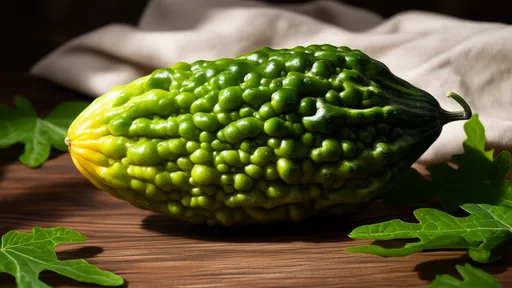
The belief that bitter gourd's potency increases with its bitterness has been passed down through generations in traditional Chinese medicine (TCM). Many claim that the more bitter the melon, the stronger its "heat-clearing" properties. But how does this folk wisdom hold up under the scrutiny of both ancient herbalism and modern nutritional science? The answer reveals a fascinating intersection between cultural knowledge and biochemical reality.
The Bitter Truth in Traditional Chinese Medicine
In TCM theory, bitter flavors correspond to the heart and small intestine meridians, possessing downward-draining and heat-clearing qualities. Practitioners have long observed that exceptionally bitter gourds induce more pronounced diaphoresis (sweating) and diuresis (increased urination) – two key pathways for eliminating "heat toxins." Ancient texts like the Compendium of Materia Medica note that wild bitter melons growing in harsh conditions develop thicker skins and more intense bitterness, which herbalists associate with stronger medicinal effects.
TCM pharmacist Li Shizhen documented that the most potent bitter gourds grew at high altitudes with minimal water, developing a yellowish-green hue rather than the common pale green. Modern TCM practitioners confirm this observation – the plant's stress response to difficult growing conditions increases its concentration of bioactive compounds. The bitterness acts as nature's warning label, signaling higher concentrations of therapeutic components.
Nutritional Science Weighs In
Laboratory analysis reveals that bitter gourd's signature bitterness comes from four key compounds: momordicin, charantin, polypeptide-p, and vicine. These phytochemicals stimulate bile production, improve glucose metabolism, and exhibit anti-inflammatory properties. Crucially, their concentration directly correlates with perceived bitterness. A 2021 study in the Journal of Agricultural and Food Chemistry found that deeply bitter varieties contained up to 47% more bioactive compounds than milder cultivars.
The plant's stress response mechanism explains this phenomenon. When facing drought, poor soil, or pest attacks, bitter melon vines produce higher levels of defensive phytochemicals – the very compounds that confer health benefits. This parallels the TCM observation about harsh growing conditions creating more potent medicine. Modern spectrophotometry has objectively verified what traditional healers discerned through taste and observation centuries ago.
The Synergy of Perspectives
While TCM describes bitter melon's effects in terms of "clearing damp-heat" and "cooling the blood," Western science identifies specific mechanisms: the momordicosides activating AMPK enzymes that regulate metabolism, charantin's structural similarity to insulin, and vicine's modulation of inflammatory cytokines. Both frameworks arrive at the same practical conclusion – greater bitterness indicates stronger physiological effects – though they use different lenses to explain why.
This convergence of ancient wisdom and modern analysis suggests we shouldn't dismiss traditional knowledge simply because it uses different terminology. The next time you grimace at an exceptionally bitter gourd, remember that your taste buds are detecting what both herbalists and scientists agree is a marker of therapeutic potency. Whether you conceptualize its effects as "heat-clearing" or "anti-hyperglycemic," the conclusion remains – sometimes, the medicine that works best is the one that tastes worst.
By /Aug 1, 2025
By /Aug 1, 2025

By /Aug 1, 2025

By /Aug 1, 2025
By /Aug 1, 2025
By /Aug 1, 2025
By /Aug 1, 2025
By /Aug 1, 2025

By /Aug 1, 2025
By /Aug 1, 2025
By /Aug 1, 2025

By /Aug 1, 2025

By /Aug 1, 2025
By /Aug 1, 2025

By /Aug 1, 2025
By /Aug 1, 2025

By /Aug 1, 2025

By /Aug 1, 2025

By /Aug 1, 2025
By /Aug 1, 2025
