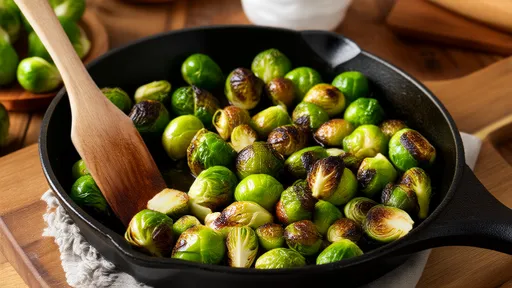
The humble Brussels sprout has long been a polarizing vegetable, often relegated to the status of a boiled holiday side dish that children push around their plates. Yet in recent years, a culinary revolution has transformed these miniature cabbages into coveted menu items at trendy restaurants. The secret? Applying enough heat to create a beautiful caramelized char – what chefs affectionately call "burnt" sprouts. This counterintuitive approach doesn't just mask the vegetable's natural bitterness; it fundamentally alters its flavor profile through fascinating biochemical processes.
When subjected to high dry heat – whether roasted, grilled, or pan-seared – Brussels sprouts undergo a remarkable metamorphosis. The outer leaves crisp into delicate shards with an almost potato-chip quality, while the interior becomes tender and sweet. This transformation occurs through two simultaneous scientific processes: caramelization and the Maillard reaction. Caramelization breaks down the sprouts' natural sugars when heated beyond 320°F (160°C), creating new flavor compounds that taste nutty, buttery, and complex rather than simply sweet.
The Maillard reaction – that same magical process that gives seared steaks and toasted bread their depth – works in tandem with caramelization when roasting Brussels sprouts. As amino acids and reducing sugars react under high heat, they generate hundreds of new aromatic compounds. This explains why properly charred sprouts develop flavors reminiscent of hazelnuts, coffee, or even chocolate notes absent in their steamed or boiled counterparts. The bitterness that makes raw or undercooked sprouts unpalatable to many becomes balanced by these rich, umami-heavy flavors.
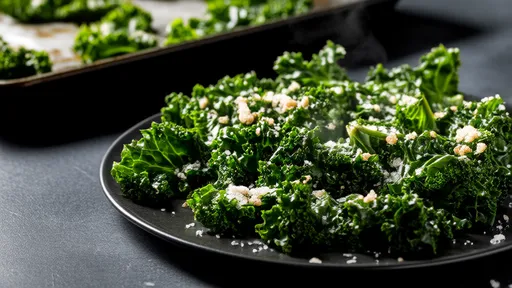
Professional kitchens have turned this scientific principle into an art form. At acclaimed restaurants, cooks deliberately leave sprouts in blazing hot pans or ovens until the outer leaves blacken in spots. The trick lies in achieving the perfect level of carbonization without crossing into acrid territory. This requires both precise temperature control and an understanding of how different cooking fats affect the process. Chefs often favor oils with high smoke points like avocado or grapeseed oil, though some swear by the flavor boost of bacon fat or duck fat.
Home cooks can replicate these restaurant-quality results by embracing a few key techniques. First, proper preparation is essential. Cutting sprouts in half maximizes flat surfaces for even browning, while loosening the outer leaves creates more crispy edges. Crowding the pan leads to steaming rather than roasting, so spacing is crucial. Most importantly, resisting the urge to stir frequently allows the desirable char to develop. A sprinkle of salt early in cooking helps draw out moisture, while a drizzle of honey or maple syrup in the final minutes can amplify the caramelization effect.
The cultural shift toward embracing charred vegetables reflects broader changes in culinary preferences. Where generations raised on boiled vegetables associated doneness with tenderness, modern palates crave contrasting textures and complex flavors. Food scientists note that our understanding of bitterness has evolved as well – no longer considered a flaw to eliminate, but rather a sophisticated note to balance. The popularity of dark chocolate, craft IPAs, and yes, properly burnt Brussels sprouts all speak to this refined sensibility.
Nutritionally, the high-heat method offers surprising benefits alongside its flavor advantages. While some vitamin C is lost during prolonged cooking, the process makes other nutrients more bioavailable. The cell walls break down, releasing antioxidants like kaempferol that may have anti-inflammatory properties. The healthy fats used for roasting also increase absorption of fat-soluble vitamins present in the sprouts. Of course, these benefits only matter if the cooking method makes people actually want to eat their vegetables – which the charred sprout phenomenon certainly achieves.
As food trends continue evolving, the lesson of the burnt Brussels sprout may be the most enduring: sometimes the most delicious results come from what we'd traditionally consider mistakes. That blackened edge, that crispy leaf clinging to the pan – these aren't signs of failure but rather the hallmarks of transformed flavor. The next time you're tempted to rescue vegetables from the oven at the first sign of color, remember: in the right conditions, bitterness doesn't disappear. It becomes something greater.
By /Aug 1, 2025
By /Aug 1, 2025
By /Aug 1, 2025

By /Aug 1, 2025
By /Aug 1, 2025
By /Aug 1, 2025
By /Aug 1, 2025
By /Aug 1, 2025
By /Aug 1, 2025
By /Aug 1, 2025
By /Aug 1, 2025

By /Aug 1, 2025
By /Aug 1, 2025
By /Aug 1, 2025

By /Aug 1, 2025
By /Aug 1, 2025

By /Aug 1, 2025
By /Aug 1, 2025
By /Aug 1, 2025
By /Aug 1, 2025
