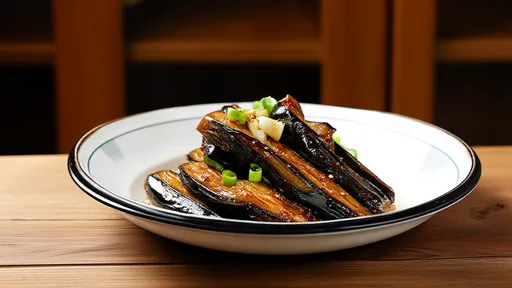
In the ever-evolving world of plant-based cuisine, a new star has emerged that’s capturing the hearts (and taste buds) of vegetarians and flexitarians alike: the “fake roast” eggplant. This ingenious dish, prepared without a drop of oil in an air fryer, delivers the smoky, savory satisfaction of grilled meat while remaining 100% vegan. What makes it truly remarkable isn’t just its health credentials, but how it transforms an humble vegetable into something that carnivores might mistake for barbecue.
The magic begins with selecting the right eggplant. Unlike traditional recipes that drown the vegetable in oil to mimic richness, this version relies on the air fryer’s intense circulating heat to create a caramelized crust while keeping the interior luxuriously tender. When scored with a knife and rubbed with a blend of smoked paprika, garlic powder, and a touch of maple syrup, the eggplant undergoes a metamorphosis. As it cooks, the sugars caramelize, the edges crisp like charred meat, and the flesh takes on an almost fibrous texture that’s startlingly similar to pulled pork.
Food scientists explain that the secret lies in eggplant’s cellular structure. When subjected to the air fryer’s dry heat, the plant’s spongy flesh collapses in a way that mirrors how muscle fibers in meat break down during slow cooking. The Maillard reaction—that complex chemical process responsible for the browned, flavorful crust on seared meats—occurs beautifully here too, despite the absence of animal proteins. It’s a culinary illusion that feels almost too good to be true.
Nutritionally, this dish is a powerhouse. A single serving provides nearly 20% of the daily fiber needs, along with antioxidants like nasunin found in eggplant’s purple skin. Unlike traditional barbecue that might leave you feeling sluggish, this plant-based alternative offers sustained energy without the heavy fats. Many home cooks report adding liquid smoke or chipotle powder to amplify the “meaty” illusion, while nutritional yeast can contribute a subtle cheesiness that rounds out the flavor profile.
The cultural implications are fascinating. Across social media platforms like Instagram and TikTok, the hashtag #eggplantbbq has spawned thousands of variations—some wrapped in lettuce like Korean ssam, others piled high on buns with vegan coleslaw. Restaurants in Berlin and Portland have even begun featuring it as a meatless Monday special, often served with sides that play on classic barbecue accompaniments: dairy-free potato salad, charred corn, and even vegan mac and cheese.
Perhaps most compelling is how this dish bridges dietary divides. At backyard gatherings, it’s not uncommon to see both vegetarians and meat-eaters fighting over the last piece. The preparation has become so popular that appliance manufacturers have taken notice—several new air fryer models now include a dedicated “plant-based meat” setting optimized for vegetables like eggplant and mushrooms. As one food blogger quipped, “Who needs expensive meat substitutes when nature already gave us the perfect vehicle for smoke and spice?”
For those eager to try, the technique is surprisingly forgiving. Unlike temperamental vegan cheeses or fussy egg replacers, the eggplant’s transformation requires little more than proper seasoning and patience. The air fryer’s convenience factor—no preheating, minimal cleanup—makes it ideal for weeknight dinners. Some adventurous cooks have taken to marinating the eggplant in coffee or black tea beforehand, adding another layer of depth that recalls the complexity of aged beef.
As plant-forward eating continues its global rise, dishes like this air-fried eggplant “roast” demonstrate how creativity and technology can expand vegetarian possibilities. It’s not about replicating meat perfectly, but rather capturing its emotional resonance—the joy of finger-licking sauce, the satisfaction of something substantial between your teeth, the communal pleasure of shared platters. In that sense, this humble purple vegetable might just be the ultimate unifier at today’s increasingly diverse dinner tables.

By /Aug 1, 2025

By /Aug 1, 2025

By /Aug 1, 2025

By /Aug 1, 2025

By /Aug 1, 2025
By /Aug 1, 2025

By /Aug 1, 2025

By /Aug 1, 2025

By /Aug 1, 2025
By /Aug 1, 2025
By /Aug 1, 2025

By /Aug 1, 2025

By /Aug 1, 2025
By /Aug 1, 2025

By /Aug 1, 2025
By /Aug 1, 2025

By /Aug 1, 2025
By /Aug 1, 2025

By /Aug 1, 2025
By /Aug 1, 2025
